A dive of firsts
So on Sunday (30 Aug 2026) I did my first dives in Scotland.
- First dive in Scotland
- First dives at Finnart Pier (A-Frames)
- First dive with my new dive club
- First dive with my new drysuit
- First dive in a hogarthian setup
- First dive with my new back plate and wing
- First dive with my new dive computer
Though I clarify “new”. It is new to me, as I have been buying gear off of eBay left, right, and centre. My wife cannot keep up with the packages that have been arriving. The rest of my dive gear is my original dive gear from back when I was teaching scuba in the Bahamas.
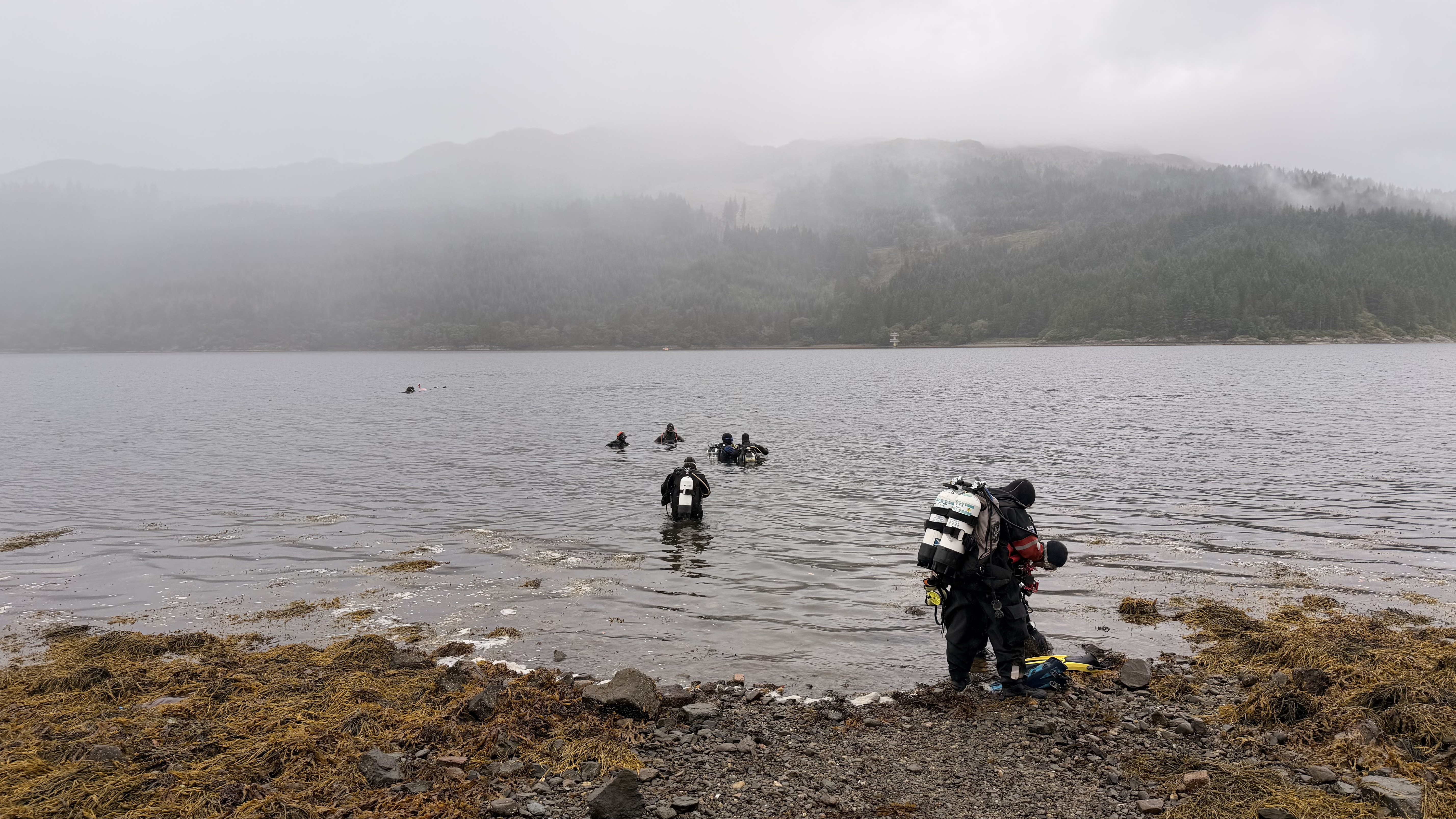
So it was an early start. We met at a local sports club before heading off to Finnart Pier, approximately 80 minutes drive away. Laurence was meant to join us for the dives but he had a terrible cold and was unable to dive. This meant I was able to car share and that would mean one less car needing to find a space to park. Finnart Pier can be over subscribed but due to it being a bank-holiday weekend and the weather wasn’t the nicest, we found that there weren’t many cars there and we were all able to park in the first car park.
There were 14 divers in our group, and there was a lot of training to get through. There was going to be waves of dives, with everyone getting at least two dives, and instructors getting three. Dives had been limited to around 20-30 minutes. I wasn’t diving the first wave, so I took on the role of Dive Marshal.
Dive Marshaling – Dive 1
My main role here was to provide surface cover, and check the divers in and out of the water. The expedition organiser had already set up the buddy pairs. So I diligently manned a slate with each diver’s name, buddy group, and what their dive goal was on it. I would then mark their entry time and starting pressure. Then when they came out I marked their exit time and ending pressure. The main reason for this is safety. We know which divers are in the water and when they went in. This is useful information to have, particularly in the case of an emergency. Or in the case of practicing rescues at the surface knowing if it is a real or a training exercise as the goal of the give is recorded.
My first dive – Dive 2
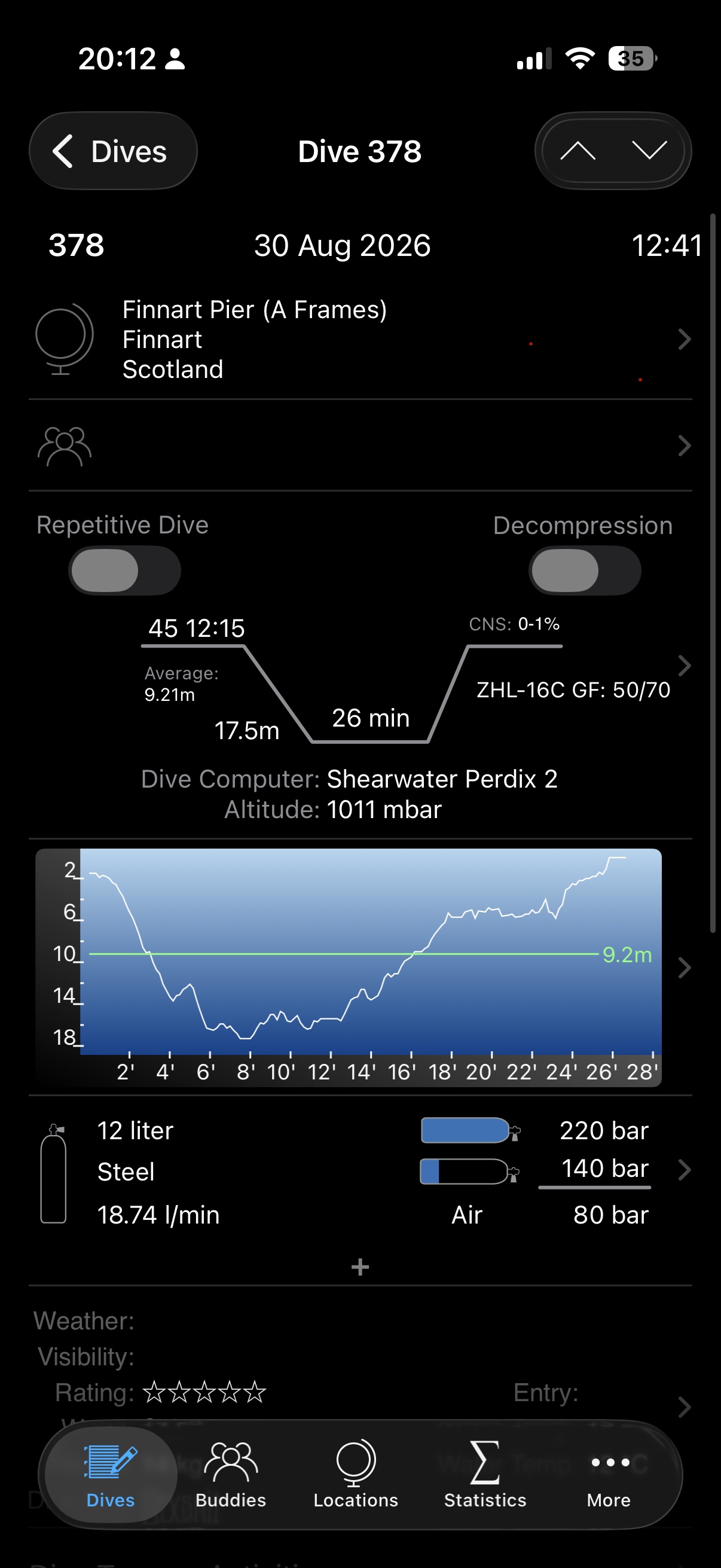
Once the first wave was back it was time for me to get my fins wet. I kitted up and headed to the waters edge. The goal for my dive was to just feel comfortable and to check my weighting. Though I knew I was going to be overweighted as I had an additional 14kg on top of my BPW + STA (Back Plate and Wing, Single Tank Adapter), which weighed around 3kg total.
I did a quick descent check at the start to see if I would sink, and like a stone I sank to the bottom. Don’t worry I was in less than a 1.5m of water, where I could easily stand up but I knew for the rest of the dive I was going to struggle at keeping still.
When you are overweighted or your trim is wrong, it causes you to move more to stay in the same place. So through out the dive I was continuously finning to keep myself in trim. Not the most enjoyable part of the dive but it is always good practice to be able to handle being overweighted. Often when instructing you can be over weighted as you need to carry extra weight for a student.
So we did a 20 minute bimble around the A-Frames before wrapping up. I managed my buoyancy with both my wing and suit, and that seemed to go quite well. At the end of the dive I did another weight check. I took out one of my quick release weights (3kg) and descended again. No issues. I took out the other, and I sank to the bottom again. That meant that I only needed an additional 8kg to descend. I nice reduction from the 14kg that I started the dive with.
My second dive – Dive 3
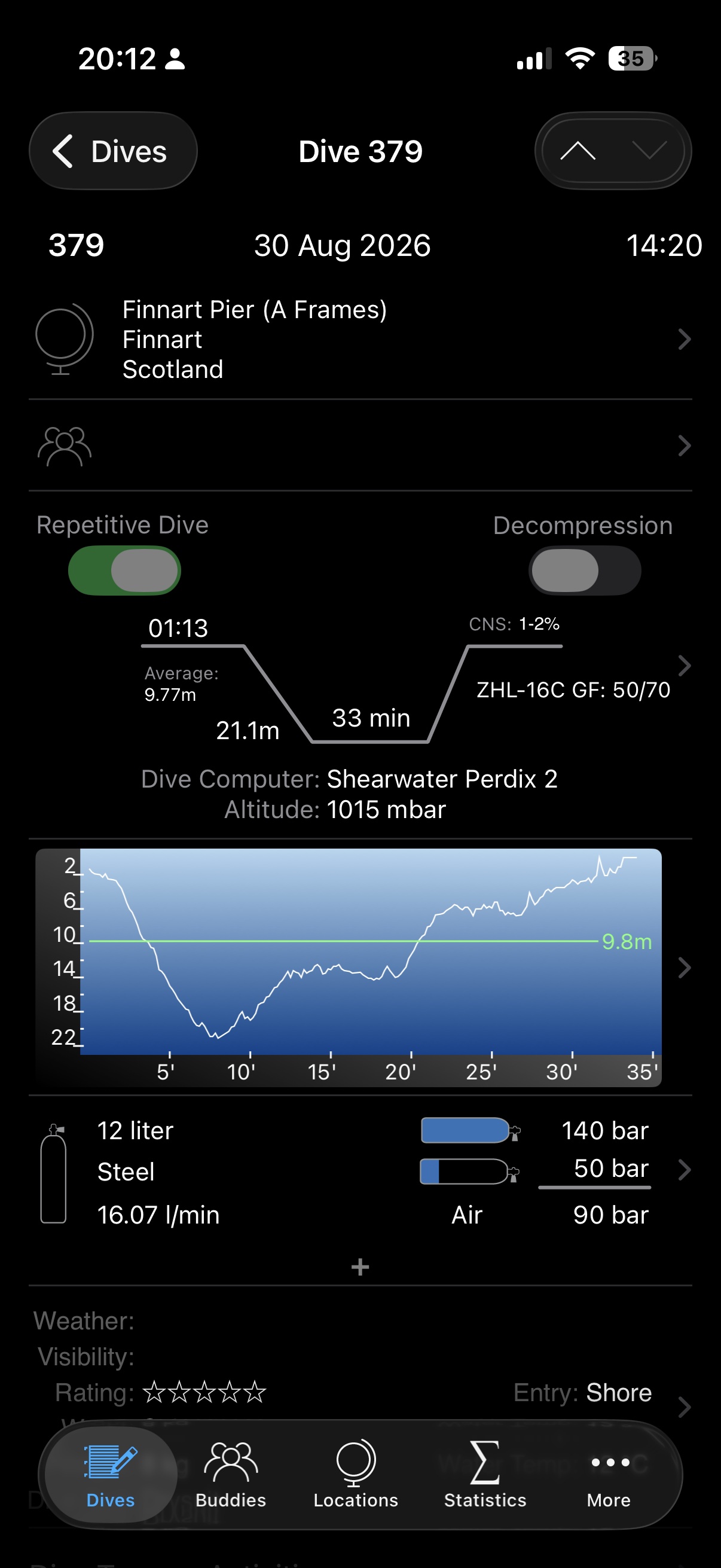
After a surface interval and some lunch it was time to jump back in. The goal of this dive was to see how the new weighting would go. I put 6kg in my quick release weights, 3 on each side, and I put 2kg in my trim pockets, 1 on each side, for a grand total of 8kg. I also decided to try and manage my buoyancy with just the suit. Many people in the club use the suit for buoyancy over their wing, so I thought to give it a go. I also didn’t change tanks, as I wanted to return to see if my new weighting would keep me down at the end of the dive with just 50 bar in the tank.
So off I went for my second dive. I have to admit I saw much more on this dive as I wasn’t struggling with my weighting. A swimming scallop, a scallop being eaten by a sea star, shrimp, langoustines, sea urchins, crabs, there was a plethora of life down there.
Although I was no longer over weighted, my weighting wasn’t right. I think I made a mistake in putting the weight in the trim pockets as I was continually being pulled back. I should have just had the total weight in the quick release pouches rather than spread across me. I ended the dive with 50 bar in the tank. And it is quick clear to see from that my breathing rate improved dramatically across the dives. The extra weight used up almost an extra 3 litres per minute. This is because I was finning more to stay in place, I am sure I can get this value down even more once I get my trim sorted. I had no issues during the safety stop with my tank at 50 bar, so I am confident that 8kg is a good weight for me, it just needs to be distributed correctly.
Post Dives
It was time to pack up. Unfortunately, while taking my drysuit off I tore my left wrist seal. So frustrating. But not much I could do about it in the field. I don’t have a quick swap seal system so I would have to spend time removing the existing seals, replacing them, and then waiting at least 24 hours for the seals to cure. So that will be a task for another day.
Once we were all packed we started the journey home. We took a quick pit-stop in Balloch at the Tullie Inn, for refreshments and to sign each others log books. All in all a successful day’s diving and a great introduction to diving in Scotland for me.

